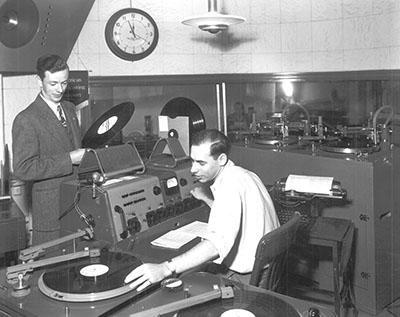
Many years ago those of us who are long-time veterans of the broadcast industry remember the era of the “Modulation Wars.”
Back in the heyday when AM meant “all the money” and FM meant “forget the money,” there was a high-stakes race to see which station in each market could be the loudest. The idea was that when a listener punched the station selection buttons on a car radio, the loudest station would have appeal and that’s where the listener would now spend time – and generate ratings and revenue.
The extent to which some stations went bordered on the absurd. I remember one station in Phoenix that had eight audio processors all hooked up at the same time. It was really loud, but the sound quality was anything but pleasing. Still, in the race for cume audience and for drive-time quarter-hour ratings, it worked – or stations wouldn’t have spent the money and done it.
The FCC feared that stations would install transmitters capable of lots more power than the station’s license permitted, turning down the power to licensed value, but having the “super-power” audio section capable of providing “super-modulation.”
Simultaneously many stations installed new, correct power AM transmitters that were designed by the transmitter manufacturers to provide extremely loud signals. Some of the first were the Harris (formerly Gates Radio) MW-1 (one kilowatt) and the MW-5 (five kilowatts).
Since it was generally the less powerful stations that needed the sound volume “boost” to compete with 10 and 50 kilowatt stations, the one and five kilowatt stations became a natural market for loud transmitters .
The MW-1 and MW-5 along with some competitors did get extremely loud. They could modulate up to 150% on positive peaks with the greatest of ease. Add to that the Harris ME-1 Modulation Enhancer, stations got really, really loud. But not for long.
The FCC cracked down. Positive peak modulation was limited to 125%. And the rule that AM station couldn’t use transmitters capable of lots more power than their license continued in force until today. And soon programmers learned that programming, not volume, brings listeners.
It seems no station ever did install any of those over-powered transmitters. The rule against them was a rule that accomplished absolutely nothing at all. And today it’s on the way out.
Here’s hoping a few more of the many obsolete FCC rules become reviewed and deleted or updated. It’s time!